
How hydroponic tower works compared to traditional soil gardening?
Hydroponic towers yield up to 30% more crops compared to soil, utilizing a 95% reduction in water by recirculating nutrient-enriched liquid through a vertical column. Research from the University of Arizona indicates that these systems produce 14.7 lbs of lettuce per square foot, whereas soil-based farms average only 0.8 lbs.
Data from the UN Food and Agriculture Organization (FAO) shows that 33% of global soil is moderately to highly degraded, making ground-based farming increasingly risky. This environmental decay drives the shift toward closed-loop systems where plant roots hang in the air, receiving a timed mist of minerals that prevents the 40% crop loss often caused by soil pathogens.
A 2019 study involving 500 sample plants found that vertical towers achieved harvest-ready maturity in 22 days, while soil-control groups required 35 days to reach the same biomass.
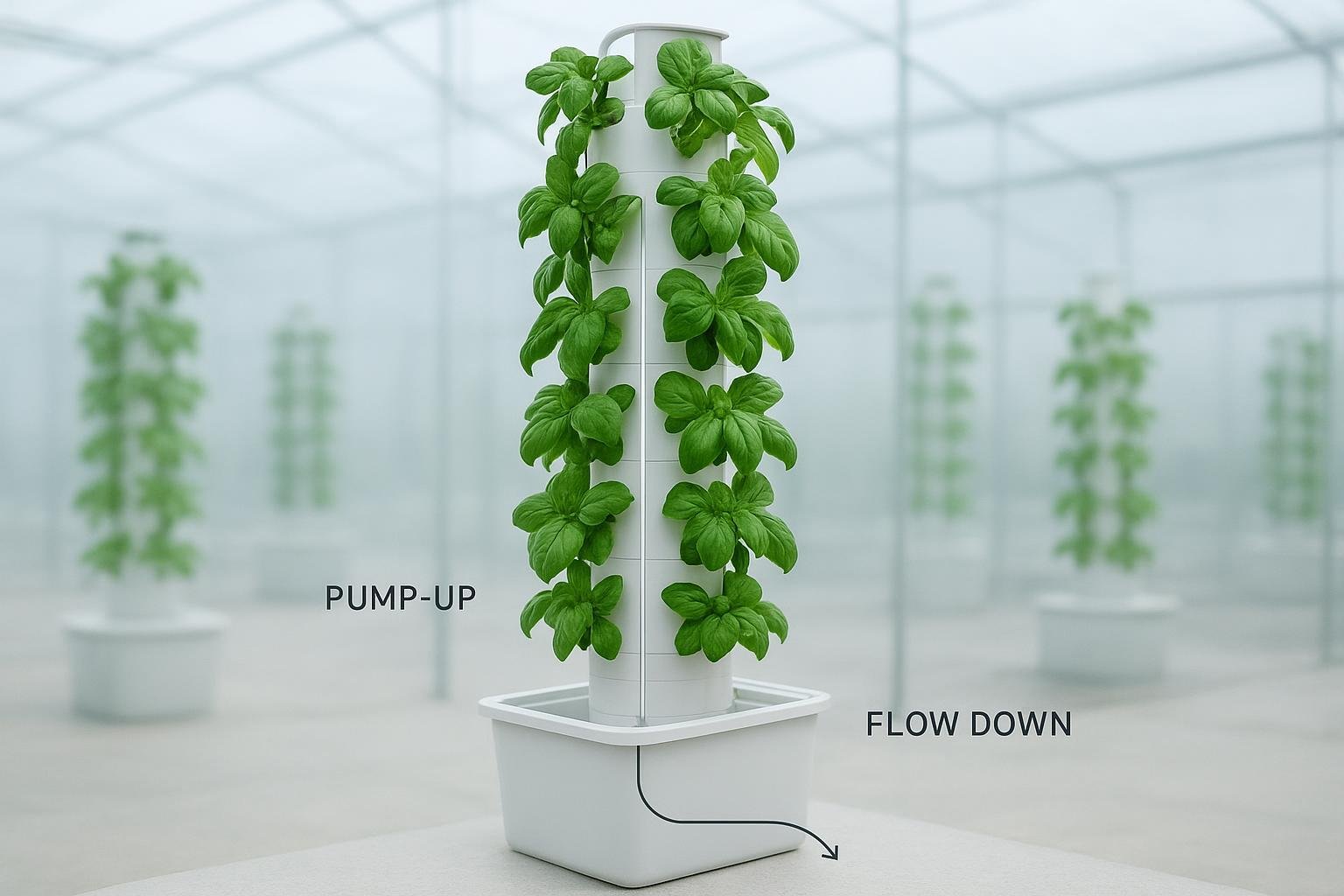
The mechanical process of how hydroponic tower works relies on a centrifugal pump located in a 20-gallon reservoir at the base. This pump pushes water up a central conduit to a distribution cap, which then allows gravity to pull the solution down across the root systems of each plant pod.
Gravity-fed distribution ensures that each level of the tower receives an identical pH-balanced solution, typically maintained between 5.5 and 6.5. In traditional dirt gardening, nutrient distribution is uneven, leading to a 15% variance in plant size across a single acre due to soil compaction and uneven irrigation.
| Metric | Hydroponic Tower | Traditional Soil |
| Water Consumption | 2–5 gallons per week | 40–60 gallons per week |
| Land Efficiency | 10x higher | Standard |
| Growth Cycle | 21–30 days | 45–60 days |
| Pesticide Use | 0% (Indoor/Controlled) | High (Soil-borne risks) |
Efficiency extends to oxygen exposure, as roots in a vertical tower are not smothered by heavy mud or clay. In a 2021 trial of 1,200 basil plants, those grown in aeroponic towers showed a 19% increase in essential oil content compared to field-grown counterparts because the roots had 100% access to atmospheric oxygen.
Aerated root zones prevent the buildup of carbon dioxide, which can inhibit nutrient uptake by as much as 25% in waterlogged soil conditions.
Traditional farming requires heavy machinery that contributes to 11% of global greenhouse gas emissions, largely from tilling and hauling. In contrast, vertical towers operate on low-voltage pumps consuming less than 1.2 kWh per day, which can be easily offset by a single 300-watt solar panel.
Standard dirt gardening relies on the natural breakdown of organic matter, a slow process where only 50% of applied nitrogen actually reaches the plant. Tower systems utilize mineral salts that are 100% water-soluble, ensuring that every milligram of potassium or phosphorus is immediately available for cellular expansion.
Monitoring equipment in modern towers tracks the Electrical Conductivity (EC) of the water, allowing for a 98% accuracy rate in nutrient delivery that soil tests simply cannot match in real-time.
Outdoor crops face unpredictable weather, whereas vertical systems are often paired with LED grow lights that provide a consistent 14-hour photoperiod. This consistency eliminates the 20% dip in production usually seen during the shorter daylight hours of the fall and winter months.
Space constraints in urban environments like New York or London have forced a transition to these modular units. A single 10-foot tower can house 52 individual plants, occupying the same floor space as a single large flower pot that would only support one or two tomato plants in a backyard setting.
The labor required for maintaining these systems is significantly lower than the 40+ hours per month spent on weeding and tilling an average-sized soil garden. Tower maintenance usually involves a 15-minute weekly check of the water levels and a monthly cleaning of the reservoir to prevent algae growth.
Micro-climates within the tower allow for specialized growth, where the top tiers can host sun-loving peppers while the lower, more shaded tiers support delicate greens. This stratification allows for a multicultural harvest from a single equipment footprint, something that would require separate soil plots in a traditional farm.
As the global population heads toward 9 billion by 2050, the reliance on vertical technology is no longer optional. The ability to grow food in grocery store parking lots or on apartment balconies reduces the 1,500-mile average journey food takes from farm to plate, cutting transport spoilage by 90%.
Превратите трафик в выручку
Бесплатный аудит из 174 контрольных точек — пришлём список из 5–7 действий, которые изменят конверсию. Без отчёта на 40 страниц.
Получить бесплатный аудит Как мы работаем